
Tokenization to Financial Primitives: Building the Next Layer of Finance
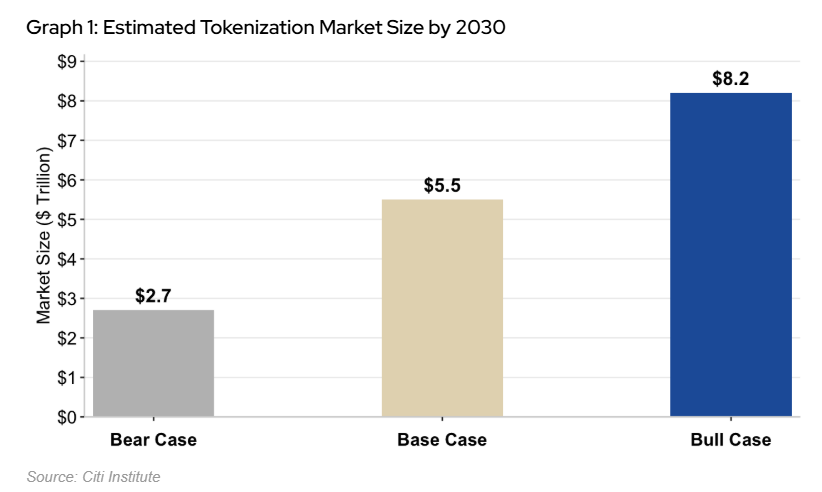
Blockchain technology is reshaping financial systems, with tokenization projected to reach $8.2 trillion by 2030(1). But what exactly is tokenization, and what benefits are driving financial institutions to explore tokenizing assets?
What is Tokenization?
Tokenization is the process of representing ownership or rights to an asset on a blockchain. These assets can include bonds, equities, real estate, commodities, art, and other financial or physical assets, including those that may be difficult to trade due to limited liquidity. Common types of tokens include non-fungible tokens (NFTs), stablecoins, and tokenized financial assets.
Tokenized equities are gaining traction, with trading volumes reaching new highs and established financial institutions showing growing interest. According to Citi Institute projections, the tokenized asset market could reach between $2.7 trillion and $8.2 trillion by 2030.
Benefits of Tokenization
One of the key benefits of tokenization is the ability to trade beyond traditional exchange hours. Blockchain technology can enable 24/7 trading and faster settlement, reducing reliance on legacy market infrastructure. It can also broaden investor access by making assets more accessible to a wider pool of participants.
Additionally, tokenization can unlock liquidity in traditionally illiquid assets, such as real estate and commodities, without necessarily requiring owners to sell their underlying holdings. Through open finance applications and protocols, tokenized assets can be used as collateral for borrowing, support lending activities, or generate yield. This creates alternative ways for asset holders to access liquidity while maintaining exposure to assets they intend to hold over the long term.
Where is it going?
Tokenized real-world assets (RWA) are emerging as a growing segment of the digital financial ecosystem. Excluding stablecoins, the value of tokenized RWAs exceeded $38 billion at the end of September 2026. As financial institutions continue to bring diversified assets on-chain, tokenization is creating new opportunities to unlock liquidity, improve asset accessibility, and put traditionally illiquid assets to productive use.
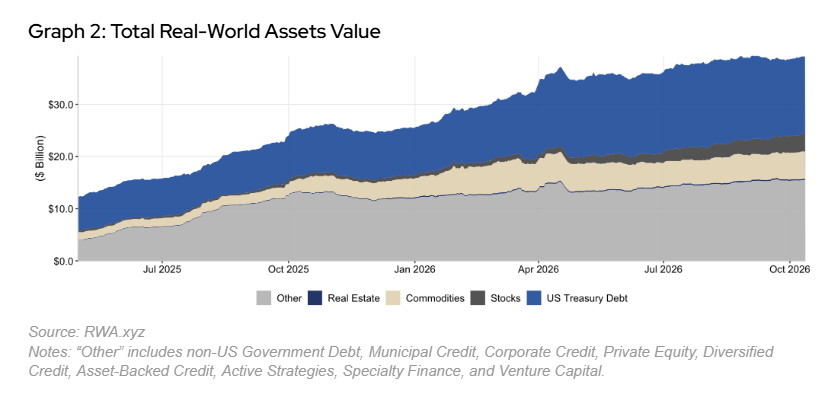
Tokenized stocks have been a key driver of growth in the broader RWA market, while real estate and commodities have also recorded notable gains. Since May 2025, the tokenized real estate market has grown by 457.61%, increasing from $40.63 million to $226.56 million. As financial institutions continue to explore blockchain-based markets, tokenization is broadening the range of assets available on-chain and is helping build the next layer of financial infrastructure.
This is part of RAAC Research, our bi-weekly read on where tokenized real-world assets are heading. Follow for the next one.
Resources
- https://www.mckinsey.com/featured-insights/mckinsey-explainers/what-is-tokenization
- https://finance.yahoo.com/markets/crypto/articles/tokenized-equity-trading-just-hit-170754705.html
- https://www.citigroup.com/rcs/citigpa/storage/public/Citi_Institute_GPS_Report_Tokenization_2030.pdf
- https://app.rwa.xyz/
Disclaimer
The services and products offered by RAAC discussed herein are not available to U.S. persons. This blog post is not intended to offer or to promote the offer or sale of these products and services in the United States or to U.S. persons.